Senior Capstone: Trailmaker
Overview
Trailmaker is a website I researched, designed, and coded to help first-generation and low-income (FGLI) college students navigate the college process. As a low-income student from an underfunded high school, my own path to NYU was a difficult one — full of steps nobody had explained to me and deadlines I found out about too late. Trailmaker was my senior capstone and my attempt to build the resource I wish I'd had: a hub where students can find clear guidance and turn it into action, instead of facing the process alone.
When navigating college, it's rarely about intelligence, but rather access to the proper guidance, and resources.
Research
Before designing anything, I wanted to understand the needs of FGLI students beyond my own experience. I built and distributed an FGLI Student Questionnaire, then followed up with one-on-one interviews with students who identified as first-generation and/or low-income.

Students felt overwhelmed — and had no single place to track it all
Across the survey and interviews, students didn't point to one impossible step. It was the sheer number of applications, deadlines, and forms, scattered across different sites and offices, that made the process feel unmanageable.

Financial aid, personal statements, and college lists were the hardest steps
When students did name a specific struggle, it was usually navigating financial aid, writing a personal statement, or building a college list — and, later, understanding internships and full-time job offers. Mental health came up throughout the responses.
Designing Trailmaker
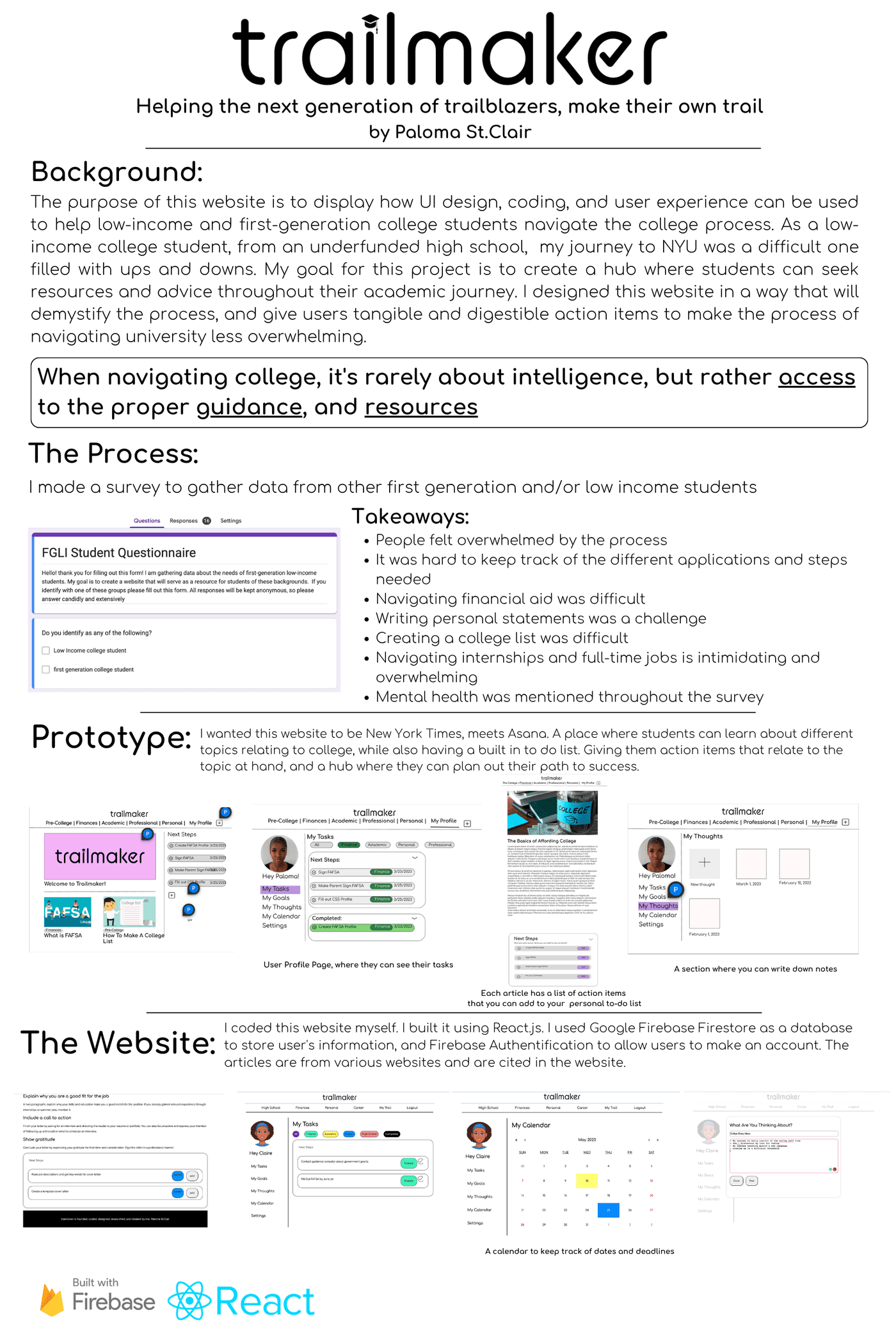
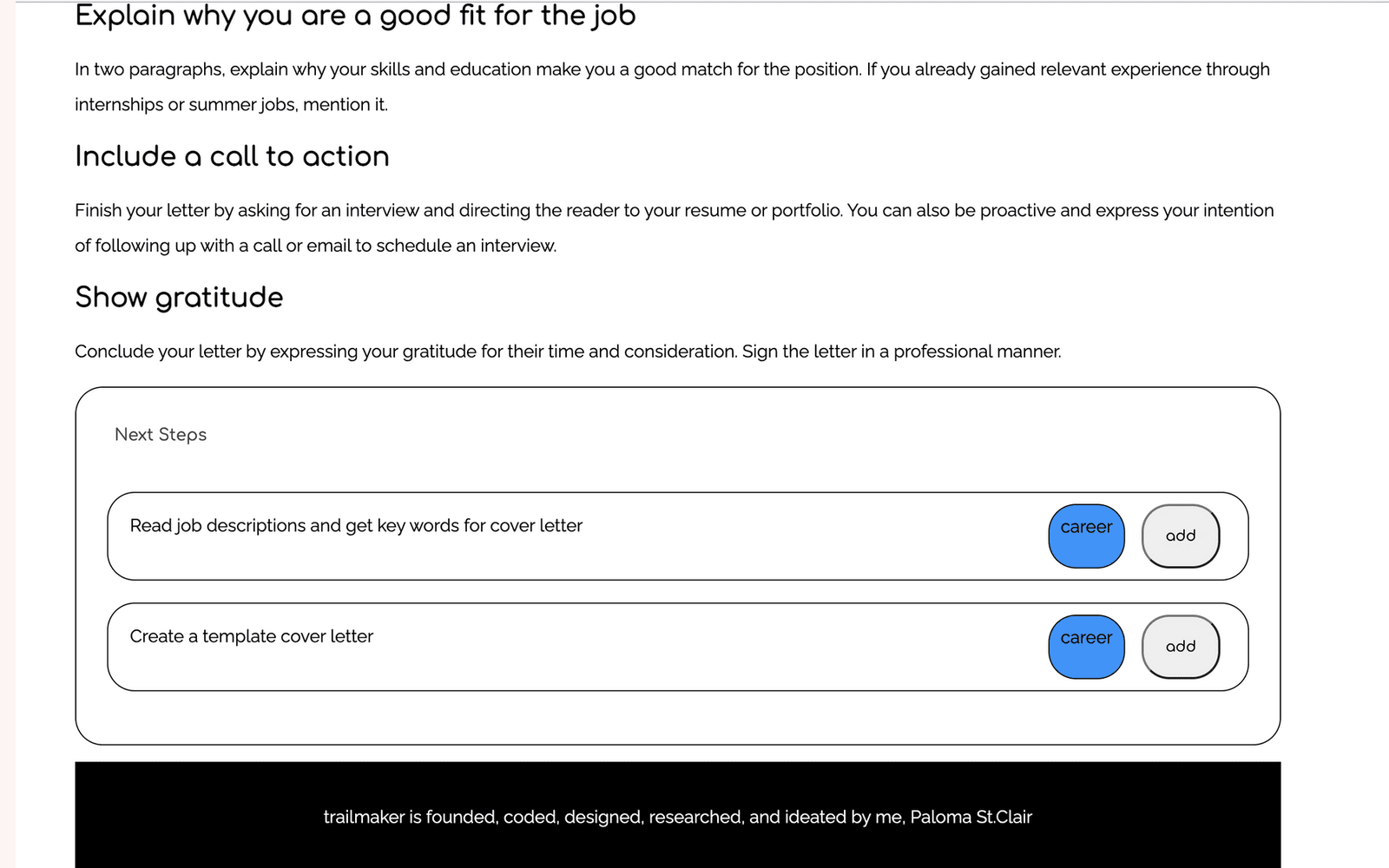
I wanted Trailmaker to feel like The New York Times met Asana — a place where a student could read a clear, well-sourced article on a topic like FAFSA or building a college list, and immediately turn what they'd just learned into action. Every article ends with a short list of next steps a student can add straight to a personal to-do list, so the information doesn't just stay on the page.
I started with low-fidelity wireframes of the core flows — an onboarding welcome screen, a finances hub, an article template, and a few rounds of the profile and "thoughts" screens — then moved into high-fidelity screens in Figma once the structure held up. I reviewed both rounds with peers and with students who matched Trailmaker's target audience, and used their feedback to iterate on the profile and thoughts flows across several versions before writing any code.
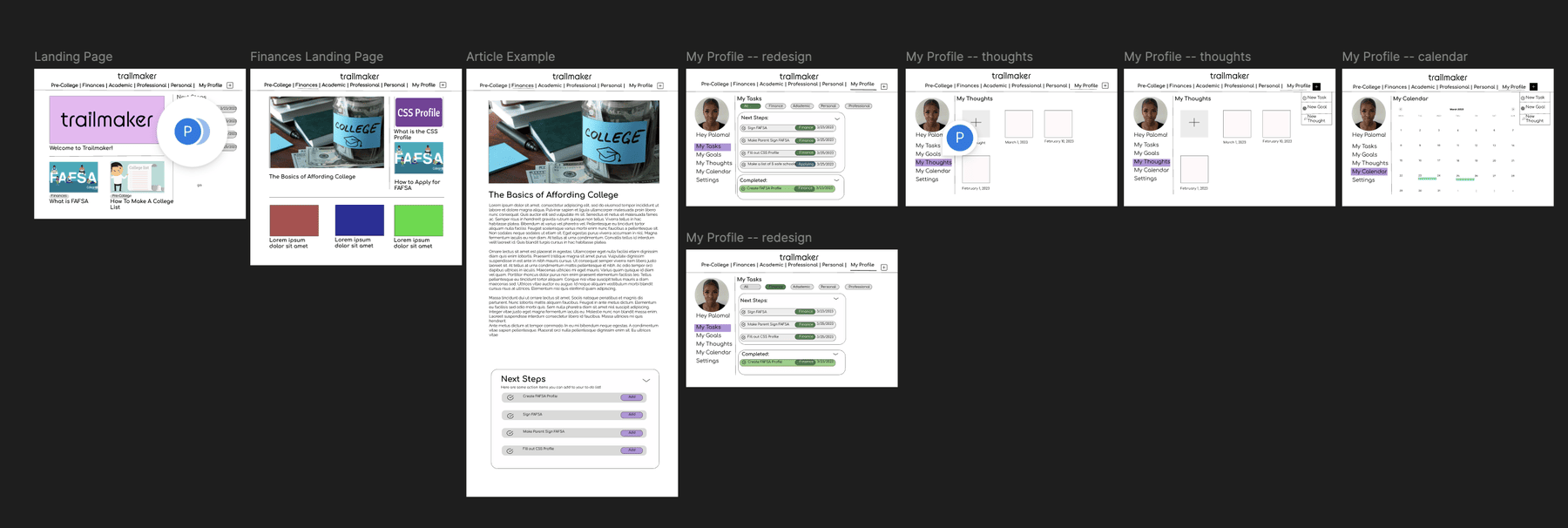
Here's where that process landed:
Building the Product
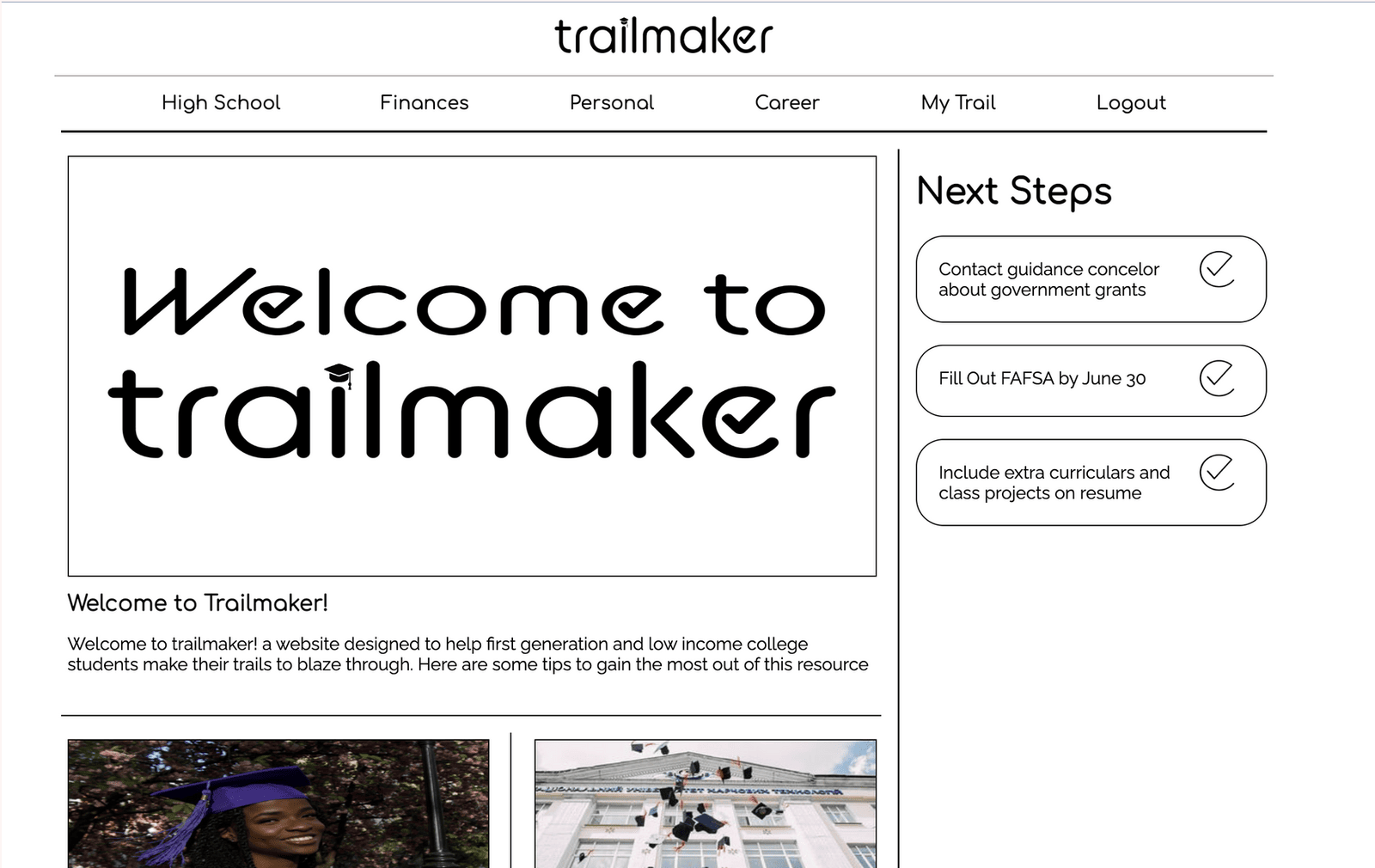
I coded Trailmaker from scratch using React.js. Firebase Firestore stores each user's profile, tasks, and notes, and Firebase Authentication handles account creation and login. Every resource article is sourced and cited from real financial aid, admissions, and career resources — the goal was for a student to trust what they were reading, not just find it convenient.
- My Tasks. Every "next step" pulled from an article — sign the FAFSA, request a recommendation letter, draft a personal statement — becomes a checkable item on a student's profile, organized by category: finance, academic, professional, and personal.
- My Calendar. A calendar view keeps deadlines like FAFSA due dates and application windows visible at a glance, so nothing important slips by unnoticed.
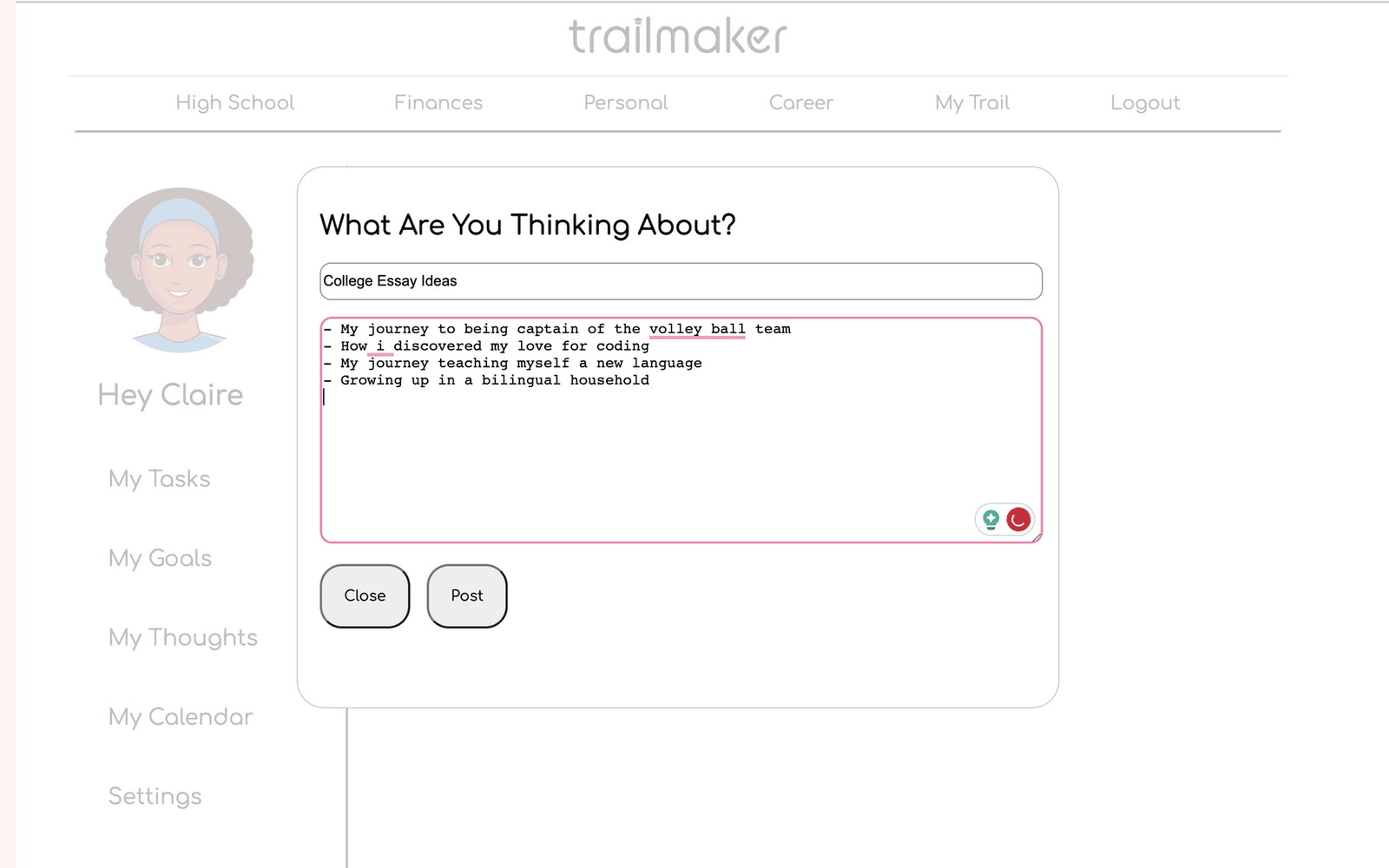
- My Thoughts. A simple, journal-style space where students can write down questions, doubts, or plans as they move through the process.
Reflection
What I learned
- Research should shape the product, not just validate it. The questionnaire and interviews didn't confirm what I already assumed — they surfaced specific, recurring pain points (financial aid, personal statements, college lists) that directly became Trailmaker's structure and content.
- Owning a product end to end. Trailmaker was the first time I carried a project through every stage myself — research, low- and high-fidelity design, and a from-scratch React build — and had to make tradeoffs at each stage knowing I'd be the one implementing them.
- Designing from lived experience, responsibly. Being an FGLI student myself gave me a head start on empathy, but the research process taught me not to design from my story alone — other students' struggles didn't always match mine, and the product is better for including theirs.