Software Engineer at Amazon
Overview
For two years on Amazon Ads, I focused on improving ad creation and ad performance for display ads on Amazon.com, specifically for SMB (small and medium business) advertisers — a segment with real ad spend but far less sophisticated tooling than Amazon's largest advertisers. My work spanned full-stack development, data-driven experimentation, and cross-team mentorship: [add a sentence here on what tied it together for you, e.g. the through-line of making advertising tools more trustworthy and transparent for smaller businesses].
Over two years I went from shipping my first ticket to owning a full-stack product used by SMB advertisers across Amazon.com.
Building Events Manager
SMB advertisers had no reliable way to confirm that actions on their own websites — an add-to-cart, a completed application, a purchase — were actually being captured and attributed back to their Amazon ads. I worked alongside four other engineers to scope, build, and launch Events Manager, a console inside the Amazon Ads UI that lets advertisers see, in real time, which off-Amazon events their Amazon ad tag is firing, how often, and when each one last fired. I owned the React frontend end to end while the rest of the team built out the Java/Spring backend and infrastructure.
The backend is Java and Spring Boot, the frontend is React and TypeScript, and it's deployed on AWS ECS via CDK with CloudWatch handling monitoring and alerting end to end.
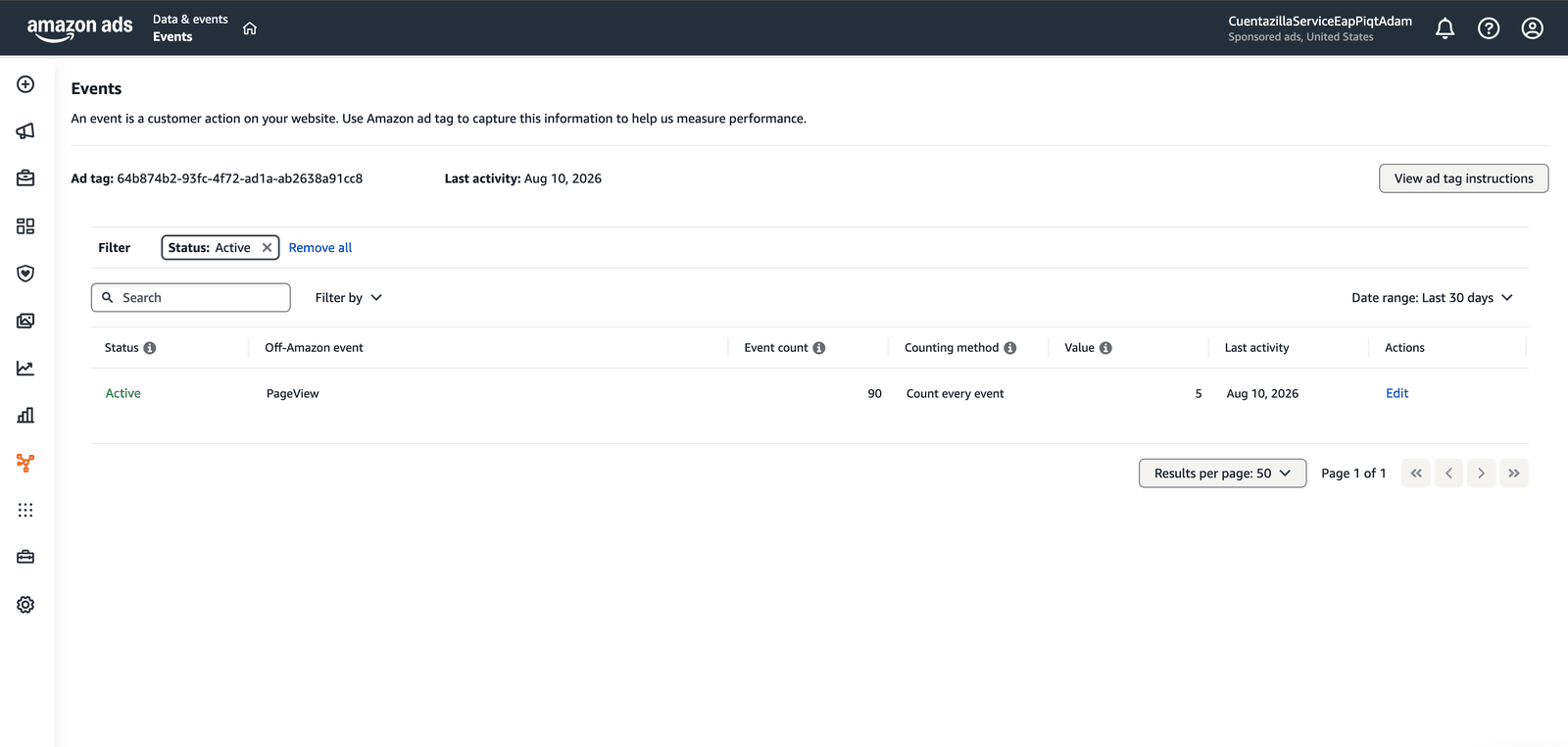
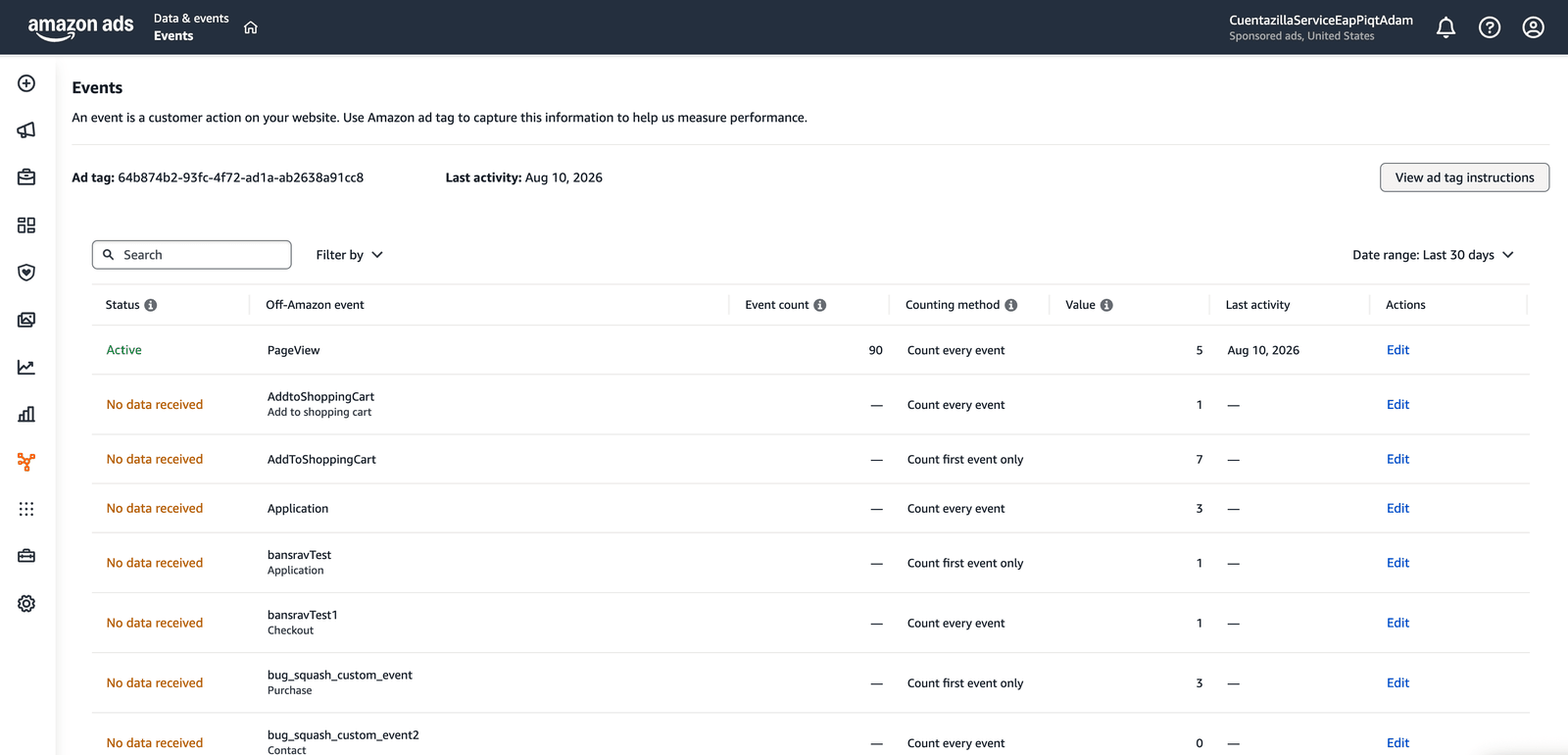
Events Manager launched to 3,000 non-endemic sponsored display advertisers and has since expanded to 10,000 advertisers across three ad programs.
Data-Driven Impact
Beyond building tools, a lot of my work was proving — with data — whether the tools and systems we already had were actually working.

Bid recommendations were being rejected 73% of the time
I used SQL to analyze user interaction data on targeting-level bid recommendations and found advertisers were rejecting the suggested bids 73% of the time — a clear signal of low trust in the model and a mismatch between recommended and acceptable price points.

Standardizing auction win rates lifted ad revenue 1.5%
I designed, implemented, and analyzed a large-scale A/B experiment inside the advertising bidder to standardize auction win rates across campaign types, resulting in a 1.5% uplift in ad revenue for the campaigns involved.
Engineering Beyond the Roadmap
- Built a proof-of-concept picture-in-picture ad format in Android Studio, using React Native and AI coding tools.
- Built and integrated a Selenium-based UI test automation suite into the team's CI/CD pipeline.
- Identified gaps in engineering onboarding and rewrote our documentation, cutting ramp-up time for new hires.
- Served in on-call rotations, debugging production issues through logs, metrics, and code-level investigation.
- Scoped a three-phase intern project using AI to resolve data discrepancies in campaign-optimization data jobs.
Leadership & Mentorship
- Co-hosted a hackathon that launched new solutions to real customer problems, pushing a customer-obsessed culture within the team.
- Mentored an intern for 12 weeks — reviewing code, unblocking debugging sessions, explaining AWS services, and making sure they experienced the full software development lifecycle.
Reflection
What I learned
- Software development. How to scope, build, launch, scale, and test enterprise-level, production-grade software — not just write code, but ship something other teams depend on.
- Customer obsession. At Amazon, the customer is at the center of everything you do. I learned how to use customer feedback — interviews, listening sessions, and data deep-dives — to actually understand a problem, then build and iterate for the people experiencing it.
- Document writing. At Amazon, documents are everything. Good documentation is what keeps a team aligned, especially one moving as fast as ours was.